


結(jié)構(gòu)優(yōu)化設(shè)計(jì)分析系列(三):APDL在Workbench中的優(yōu)化設(shè)計(jì) 
文件,并新建優(yōu)化設(shè)計(jì)分析如下圖示:在Mechanical APDL中的Analysis將APDL的參數(shù)定義好是輸入?yún)?shù)還是輸出參數(shù),并參數(shù)化:返回Ansys Workbench界面,雙擊打開(kāi)Design of Experiments,設(shè)置輸入?yún)?shù)的限制范圍:P1-X1為0.36~0.44,P2-X2為1.08~1.32;隨后點(diǎn)擊左上角的Preview,查看優(yōu)化設(shè)計(jì)點(diǎn),沒(méi)問(wèn)題便可點(diǎn)擊Update
2763 3 1
鐘偉良 ??? 10月前
ADAMS的發(fā)展史
我是從1963年開(kāi)始從事運(yùn)動(dòng)及動(dòng)力學(xué)的事情,當(dāng)時(shí)在Polytechnic Institute of CLUJ Romania有份職位讓我進(jìn)行機(jī)械機(jī)構(gòu)學(xué)(theory of machinery and mechanisms, TMM)的教學(xué)工作。 因?yàn)檫@個(gè)緣故,我的一個(gè)訪美教授推薦我去美國(guó)攻讀研究所學(xué)位。經(jīng)過(guò)長(zhǎng)時(shí)間的等待,終于收到了出境簽證。我是1970年2月25日到的美國(guó)。
3041 23 13
peaky ??? 3年前
ABAQUS橡膠支座仿真:有初始轉(zhuǎn)角的橡膠隔震支座水平力學(xué)性能研究 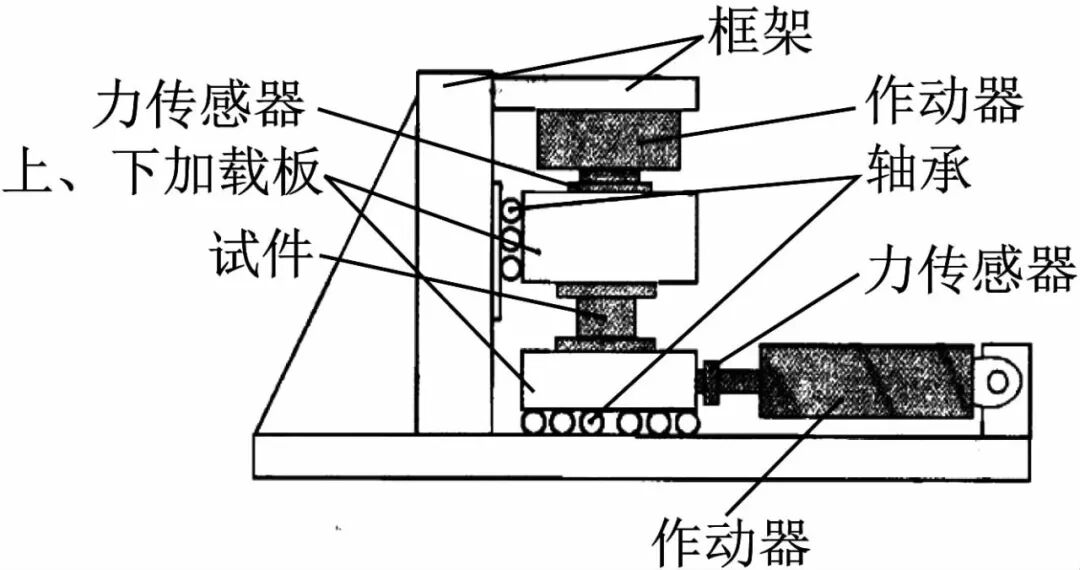
[9]HE W F,LIU W G,YANG Q R,et al.Nonlinear rotation and shear stiffness theory and experiment research on rubber isolators [J].Journal of Engineering Mechanics,2012,138(5):441-449.DOI:10.1061/(ASCE
3944 6 3
想飛更高 ??? 2年前
ABAQUS子程序UMAT里彈塑本構(gòu)的實(shí)現(xiàn) 
tangent stiffness method and the theory of algorithms to do an in-depth analysis of deduced a regular tangent stiffness and rigidity of the law of the specific expression of algorithm theory, and then
9964 29 8
夏蟲_3935 ??? 4年前


技術(shù)鄰APP
工程師必備
工程師必備
- 項(xiàng)目客服
- 培訓(xùn)客服
- 平臺(tái)客服
TOP
